


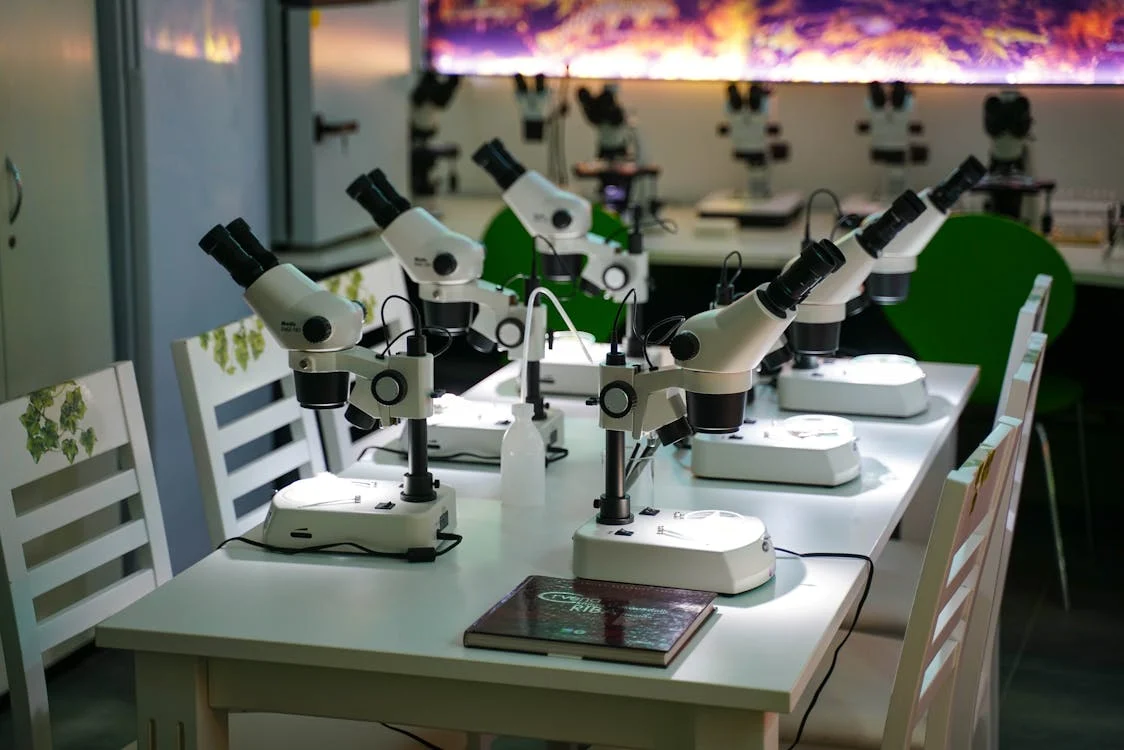
The investigative nature of forensic sciences demands advanced tools that enable scientists to uncover intricate details in the artifacts they examine. Numerous criminal cases have been solved thanks to investigators spotting microscopic features in evidence that link directly to perpetrators. This critical need is effectively addressed by scanning electron microscopy (SEM) SEM products.
What is SEM? SEM stands for Scanning Electron Microscopy—a cutting-edge technology that employs a focused beam of electrons to generate high-resolution images of microscopic objects. Compared to traditional optical microscopes, SEM offers significantly higher magnification and superior resolution. This allows forensic experts to analyze details as small as a nanometer, unlocking valuable information that can close investigations efficiently.
How Electron Microscopes Work
Electron microscopy comes in two primary forms: Transmission Electron Microscopy (TEM) and Scanning Electron Microscopy (SEM). Both techniques use electron beams to create images, but they differ in how electrons interact with the specimen.
Transmission Electron Microscopy (TEM): This method transmits electrons through an ultra-thin specimen. An objective lens beneath the sample collects transmitted electrons, and the resulting pattern is used to form a detailed image. TEM offers higher magnification and resolution, ideal for viewing ultrastructural details.
Scanning Electron Microscopy (SEM): SEM scans the surface of a specimen with a focused electron beam. Secondary electrons emitted from the surface interactions are collected by detectors to form a three-dimensional, high-resolution image. SEM provides a larger field of view compared to TEM, enabling detailed surface analysis over broader areas.
Critical Forensic Applications of SEM
With its extraordinary imaging capabilities, SEM is indispensable in various forensic science domains, including:
Gunshot Residue Analysis
In firearm-related crimes, spent bullet casings are vital evidence. However, when perpetrators remove casings, confirming firearm use becomes challenging. SEM allows forensic experts to detect and analyze microscopic particles of gunshot residue (GSR) on victims or surrounding surfaces, linking the crime to firearms even in the absence of shell casings.
Bullet Comparison
Every firearm leaves unique micro-marks on the bullets it fires, stemming from barrel rifling and firing pin characteristics. SEM exposes these fine surface details in high resolution, assisting forensic scientists in matching bullets to specific weapons and even identifying manufacturing information, which can be pivotal during investigations.
Crime Scene Particle Analysis
SEM aids investigators in examining trace evidence like glass fragments from break-ins or other environmental particles. Its high-resolution surface imaging capability allows precise matching of fragments found on suspects with those collected at crime scenes, strengthening the evidentiary link.
Fingerprint Analysis
Traditional fingerprint collection typically involves dusting with powders. However, fingerprints on conductive surfaces like metal do not require such treatment. SEM can capture highly detailed images of fingerprints on these surfaces, offering enhanced clarity for matching prints against databases accurately.
Beyond crime scenes, SEM is also valuable in forensic anthropology, pathology, and epidemiology.
In forensic epidemiology, SEM played a crucial role during the COVID-19 pandemic by imaging viral particles, enabling researchers to identify the original SARS-CoV-2 strain and its variants through high-resolution morphological analysis. This technology also aids in investigating suspicious deaths related to infectious diseases.
Forensic anthropology benefits from SEM by analyzing bone, tooth, and tissue samples from decomposed victims. The microscope reveals minute structural details that assist in determining the cause and circumstances of death.
Forensic pathology relies on SEM to examine wound morphology and identify infections that may contribute to a victim’s death. These detailed analyses support pathologists in drawing definitive conclusions.
The Bottom Line
Scanning electron microscopes, along with transmission electron microscopes, provide unparalleled resolution to reveal evidence details impossible to detect using optical microscopy. Their high magnification and surface imaging capabilities make them invaluable across forensic disciplines.
By enabling the clear visualization of critical evidence such as bullet casings, residue particles, glass fragments, and fingerprint minutiae, SEM technology accelerates case resolutions and strengthens forensic investigations.
Read More: A Guide to Finding the Best Arthroscopic surgeon around you: A Guide for a common man!
Frequently Asked Questions (FAQs)
SEM provides much higher magnification (up to several hundred thousand times) and superior resolution, allowing forensic scientists to observe nanoscale details on evidence surfaces that optical microscopes cannot detect.
While SEM excels at analyzing solid, conductive, or properly prepared samples such as metals, bone fragments, and particles, certain non-conductive samples may require special coating or preparation before SEM examination.
SEM identifies and characterizes microscopic particles generated by firearms discharge, even when no bullet casings are recovered, thereby linking suspects or victims to gun usage.
SEM is mostly non-destructive; samples are generally preserved during the imaging process, making it suitable for forensic investigations requiring evidence integrity.
SEM’s ability to reveal fine details can re-examine old evidence under new light, enabling breakthroughs in cold cases where initial examinations failed to detect critical information.