


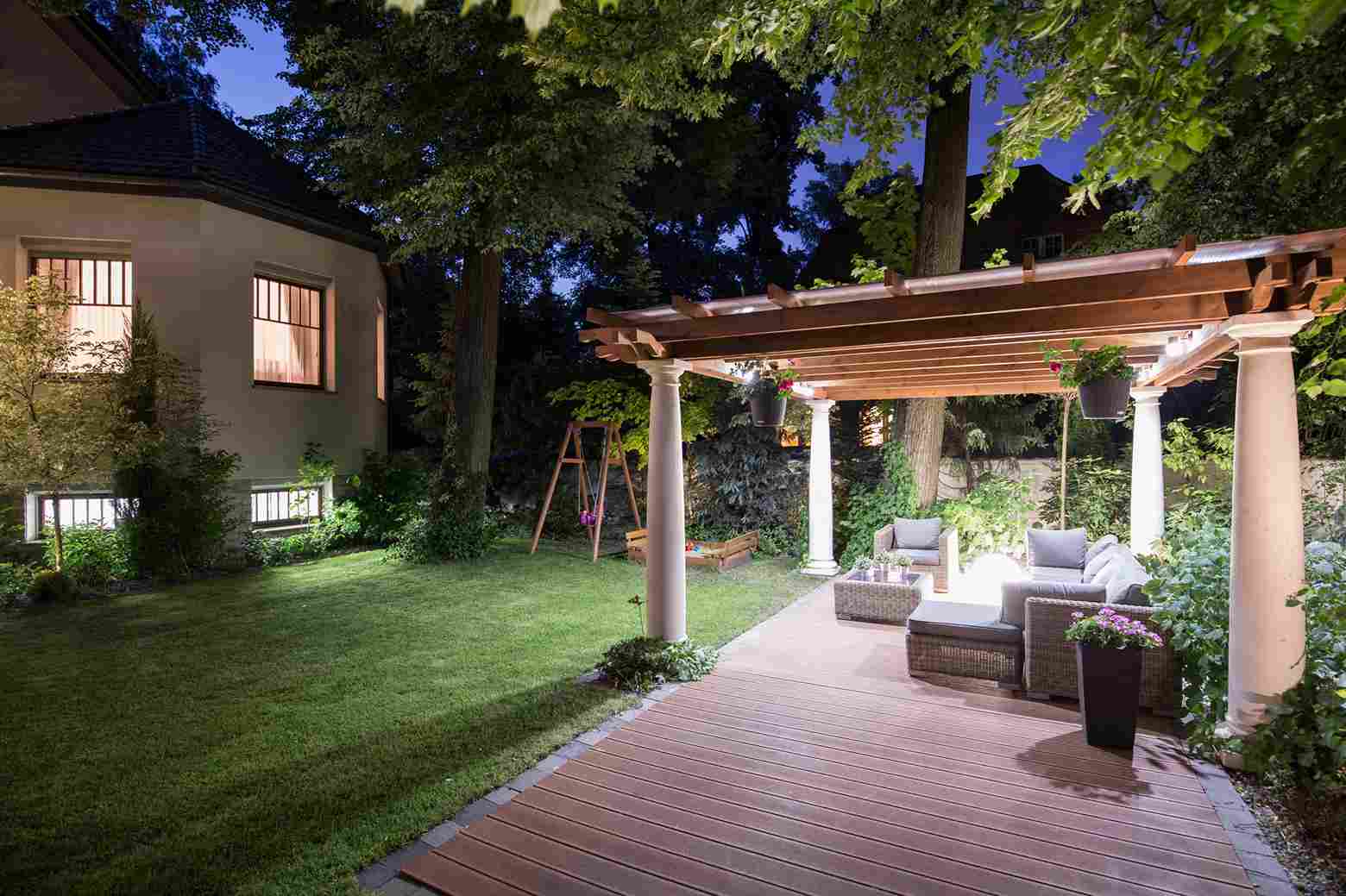
Did you know that smart lighting is transforming the outdoor lighting industry? Advanced smart technology empowers homeowners nationwide to control and customize their outdoor lighting systems with unparalleled ease.
While these innovative tech trends offer exciting possibilities, there are still numerous lighting pitfalls in the market that you should avoid to ensure a flawless outdoor lighting setup!
In this article, we’ll dive into the top 7 common outdoor lighting mistakes homeowners should avoid for the best results.
1. Generating Too Much Outdoor Light at Night
Outdoor lighting aims to create a welcoming ambiance that can be enjoyed during all hours. However, one of the most common mistakes is producing excessive light at night.
The optimal amount of outdoor lighting depends on your environment and requires a balancing act. Excessive lighting can not only be overwhelming but may disturb your neighbors and residents alike.
Wondering how to find the right level of lighting? A helpful guideline is to match or slightly complement the brightness of nearby public lighting.
Your yard should be sufficiently illuminated for nighttime activities while blending harmoniously with surrounding areas. Achieving the perfect lighting balance will take some trial and adjustment.
2. Installing Outdoor Lighting in Bright Spaces
Don’t let high energy bills catch you off guard. Take note of the existing light sources nearby to better estimate how many watts you’ll need to sufficiently light your outdoor space.
Avoid installing more lighting than necessary, especially if your outdoor area is already illuminated by strong ambient lights. Over-lighting in well-lit areas wastes both money and energy.
If minimal lighting is required, consider subtle options like candles or torches rather than bright LED fixtures. Urban environments, in particular, are vulnerable to light pollution, so low-light solutions are advisable.
3. Investing in the Wrong Types of Lighting
With hundreds of outdoor lighting products on the market, choosing the right one can be overwhelming. However, a little research can prevent costly mistakes.
If you desire versatile lighting, consider investing in LED outdoor light light sources known for their flexibility.
LED lights remain a popular choice due to their adjustability and dimmability, making them ideal for various outdoor settings.
Also, check any applicable Outdoor Residential Lighting regulations or community guidelines, especially if you reside in a neighborhood with specific outdoor lighting restrictions.
4. Forgetting the Outdoor Lighting Budget
Before searching for the perfect outdoor lighting, set a clear budget for your project. Knowing your spending limits helps prevent costly overspending.
Involve family members in the decision-making, especially those who spend the most time outdoors—they often have valuable insights.
By keeping your budget in focus, you ensure the choice process stays practical and aligned with your financial goals. Neglecting the budget can lead to unnecessary expenses that are simple to avoid.
5. Ditching Eco-Friendly Lighting Options
Ignoring eco-friendly lighting solutions is a critical oversight in today’s environmentally conscious world. Sustainable energy use is crucial for preserving natural resources.
Fortunately, numerous companies now offer energy-efficient outdoor lighting products that reduce environmental impact without compromising performance.
Choosing sustainable options now is not only responsible but also cost-effective over time, as they tend to lower energy bills and require less maintenance.
Stay ahead by opting for eco-friendly lights to illuminate your outdoor spaces efficiently and sustainably for many years.
6. Selecting Too Many Expensive Finishings
Outdoor lighting fixtures endure constant exposure to weather elements, leading to natural wear and tear.
Investing heavily in high-end finishes may seem appealing but often isn’t practical, as these finishes can fade or deteriorate quickly, especially in areas with heavy rain or strong winds.
Opt for durable yet affordable fixtures that can withstand outdoor conditions better. Often, more budget-friendly options combined with minor maintenance can keep your fixtures looking fresh longer.
7. Selecting Cool Tones Over Warm Tones
Natural sunlight has warm-toned lighting, which is soothing and inviting for outdoor spaces. Avoid selecting cool-toned lighting such as blue or stark white lights to replicate this effect.
Cool-toned lights can negatively impact eye comfort and may even affect sleep patterns and brain health.
Warm-toned lights create a smooth transition from day to night and are generally more relaxing to the eyes.
If you find warm lighting too intense at night, warm-white bulbs offer a balanced hue that’s easier on the eyes while still maintaining a cozy ambiance.
Avoid These Outdoor Lighting Errors!
You’re now equipped with the knowledge of the top 7 outdoor lighting errors to avoid when selecting your next lighting solution.
Always prioritize warm tones and energy-efficient options to enhance your outdoor space in 2024 and beyond.
For further inspiration and the latest trends, explore our other blog articles.
Read also: Solar Lights’ Mobility and Luxury
Frequently Asked Questions (FAQs)
Smart outdoor lighting allows homeowners to customize brightness, color, and schedules, often controlled remotely via smartphone apps. This enhances convenience, energy savings, and security.
Use downward-facing fixtures, opt for warm-tone bulbs, avoid excessively bright lights, and install timers or motion sensors to minimize unnecessary illumination.
Yes, LED lights are energy-efficient, durable, and offer adjustable brightness, making them excellent for outdoor environments.
Warm tones between 2700K and 3000K are generally recommended as they provide a natural and inviting ambiance, while minimizing glare and disruption.
Start by assessing your lighting needs, research product costs, and factor in installation and maintenance expenses. Setting a realistic budget upfront helps avoid overspending.